🎉 Ask about earning $100/day! 🎉 Earn $100/day!
Aging in Place
Why Aging at Home Leads to Better Outcomes
9 min read
Across nearly every measurable outcome that matters, cognitive decline, infections, falls, depression, survival, older adults who stay in their own homes do better than those who don't. Here's what the research shows.
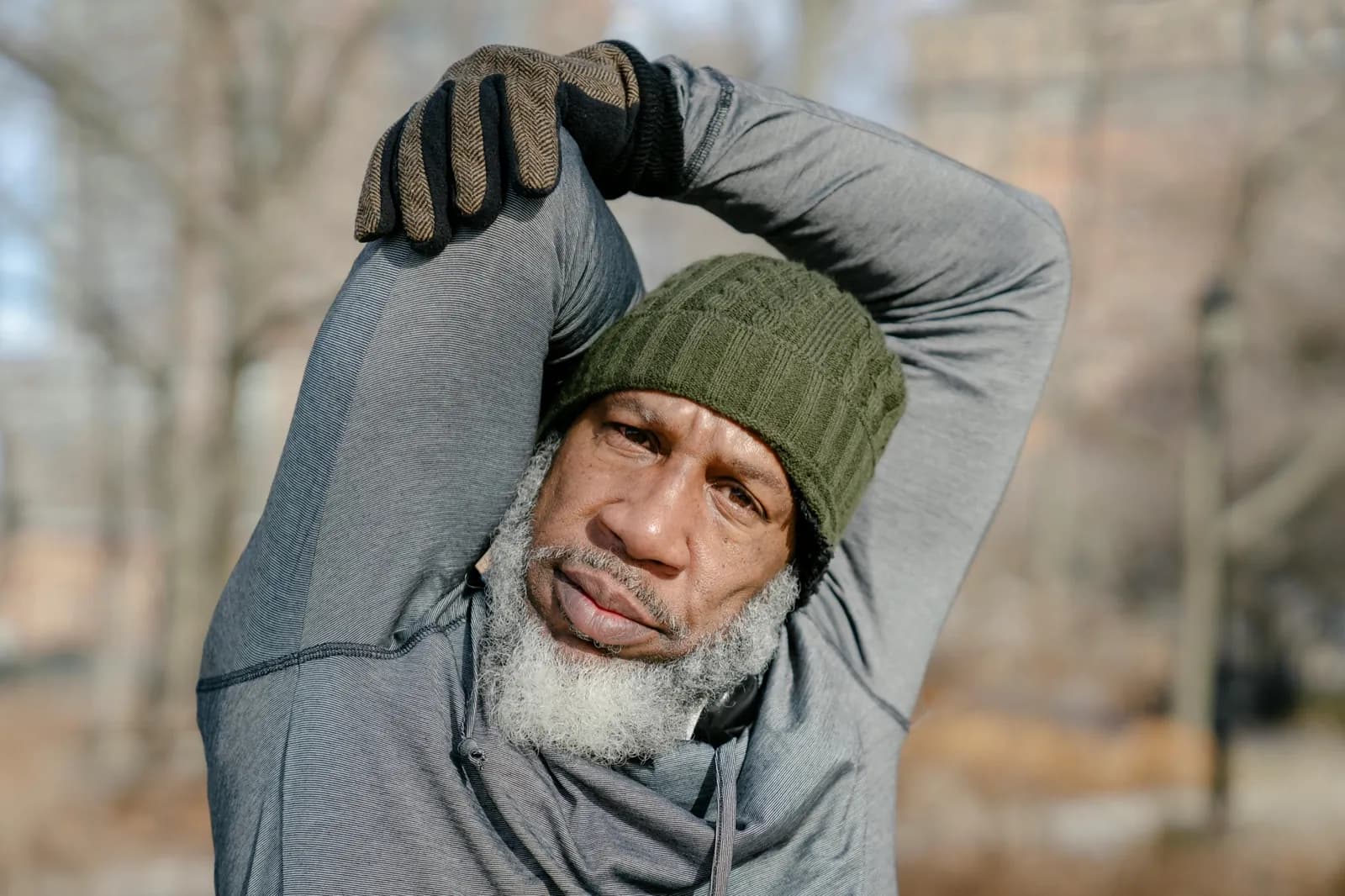
Most families don't choose between home care and a nursing facility from a position of strength. They choose under pressure, after a hospital discharge, after a fall, after a diagnosis no one was prepared to hear. In that moment, a nursing facility can feel like the safe, responsible choice. The professional answer. The one your siblings won't second-guess.
But across nearly every measurable outcome that matters to an aging person, how clearly they think, how often they get sick, how often they fall, how depressed they become, how long they live, the research consistently shows that older adults do better when they stay in their own homes. Home isn't just a preference. It's an intervention.
This piece walks through what the evidence actually shows, where home care has real limits, and why the State of Indiana has spent the last two years building a system designed around keeping people in their houses for as long as possible.
What Older Adults Actually Want
The first thing worth establishing is that this isn't a marginal preference. It's overwhelming.
AARP 2024 SURVEY
0%
of adults aged 50 and older want to remain in their current home as they age.
A 2024 national survey from AARP found that 75% of adults 50 and older want to stay in their current home as they age, and 73% want to stay in their current community.[1] The University of Michigan National Poll on Healthy Aging puts the number even higher: 88% of adults 50 to 80 believe it is important to stay in their homes as long as possible.[2]
This number has been remarkably stable across two decades of surveys. It cuts across income levels, regions, political affiliations, and education. When someone tells you they want to stay home, they aren't being stubborn or unrealistic. They're describing the conditions under which they're most likely to do well.
The research suggests they're right.
The Familiarity Effect: Cognitive Decline and Dementia
The most striking finding in this entire body of research concerns Alzheimer's disease.
A study published in the American Journal of Psychiatry by researchers at the Rush Alzheimer's Disease Center followed 432 older adults with Alzheimer's for up to four years. They were tested every six months on a battery of nine cognitive assessments. During the study, 155 of the participants were placed in a nursing home.[3]
The researchers found that nursing home placement was associated with a markedly faster rate of cognitive decline, even after controlling for how severe the dementia was at the time of placement. In other words, the acceleration wasn't simply because sicker people were being placed. The placement itself appeared to be doing something.
The researchers' interpretation, in the words of lead author Robert S. Wilson, Ph.D.:
"The increased cognitive decline upon placement may reflect difficulty adapting to an unfamiliar environment, consistent with clinical reports of increased confusion and behavior problems in those with dementia during acute hospitalization or trips away from home."
A separate longitudinal study by Cipriani and colleagues reinforced this finding. They tracked dementia patients across different living situations and found that cognitive decline was significantly faster for patients living in nursing homes and for those living alone, and that body mass index, a strong marker of overall health in older adults, also dropped more sharply in those settings.[4]
The pattern is clear. For people with dementia in particular, the home is not just where they want to be. It's where their brain keeps working better, for longer.
The Risks Most Families Don't Know About
The reason families default to facilities under pressure is usually fear. Fear of falls. Fear of medical emergencies. Fear of being unable to provide what a "real" caregiver could provide. These fears are understandable, but on the two outcomes families fear most, the data points the other direction.
Infections
Nursing homes are congregate living environments. Hundreds of people sharing dining rooms, bathrooms, ventilation systems, and caregivers move pathogens around in ways a single-family home does not.
The CDC estimates that 1 million to 3 million serious infections occur each year in nursing homes, assisted living facilities, and skilled nursing facilities in the United States.[5] Pneumonia and related lower respiratory tract infections are the leading cause of death among nursing home residents.[6]
COVID-19 STUDY, OLDER ADULTS 75+
5.03×
higher infection rate in residential care settings vs. home-dwelling older adults.
The pandemic produced the cleanest natural comparison we have. A 2021 study from Italy compared infection and mortality rates between residents of long-term care facilities and home-dwelling adults aged 75 and older. Living in a residential setting was associated with an infection rate five times higher than living at home, and a mortality rate of 19.3% versus 13.0% for home-dwelling adults.[7] A separate report from the U.S. Department of Health and Human Services' Office of the Inspector General found that more than 1,300 American nursing homes had COVID-19 infection rates of 75% or higher during peak periods, with 20% mortality.[8]
The COVID years are an extreme case, but the underlying dynamic, that congregate facilities concentrate infection risk, applies to ordinary flu seasons, norovirus outbreaks, and the kinds of infections that quietly accumulate when many vulnerable people share a building.
Falls
Many families assume that 24/7 supervision in a facility must mean fewer falls. The opposite is true.
CDC DATA, U.S. NURSING HOMES
50–75%
of nursing home residents fall at least once each year, roughly double the rate of older adults living at home.
According to the CDC, 50 to 75 percent of nursing home residents experience a fall every year, roughly twice the rate of older adults living in the community.[9] The average nursing home resident falls 2.6 times per year.[10] And although nursing home residents make up only about 5% of adults over 65, they account for approximately 20% of all fall-related deaths.[9]
There's also a transparency problem: a 2025 report by the U.S. Department of Health and Human Services found that nursing homes failed to report 43% of falls that resulted in major injury and hospitalization among Medicare-enrolled residents.[11] Which means the official numbers, already striking, are an undercount.
Why are facility falls more common than home falls? Unfamiliar environments increase confusion. Shared rooms and shifting roommates disrupt routines. High resident-to-staff ratios mean fewer eyes during the riskiest hours. And residents whose mobility deteriorates rapidly after admission, itself a documented effect of institutionalization, are more vulnerable to losing balance.
A familiar home with a familiar caregiver who knows the person's daily rhythm is, statistically, the safer environment.
The Quiet Cost of Loneliness
Perhaps the most consistent finding across the research on aging environments is the gap in mental health outcomes between home-dwelling and facility-dwelling older adults.
A 2022 study published in the International Journal of Environmental Research and Public Health summarized the evidence this way: between 10 and 30 percent of older people living at home show depressive symptoms, while nearly 50 percent of nursing home residents do.[12] The CDC reports that nursing homes have the highest depression rates of any managed care setting in the country.[13]
Roughly half of all nursing home residents in the United States, approximately 900,000 people, are on antidepressant medication.[14]
| Outcome | At Home | In a Nursing Facility |
|---|---|---|
| Depression rate | 10–30% | ~50% |
| Annual fall rate | ~25–30% | 50–75% |
| Falls per resident/year | <1 | 2.6 average |
| Reported antidepressant use | Far lower | ~50% of residents |
| COVID-19 infection rate (75+, 2021 Italy study) | Baseline | 5.03× higher |
| Cognitive decline rate (Alzheimer's, post-placement) | Baseline trajectory | Significantly accelerated |
Depression rate
- At Home
- 10–30%
- In a Nursing Facility
- ~50%
Annual fall rate
- At Home
- ~25–30%
- In a Nursing Facility
- 50–75%
Falls per resident/year
- At Home
- <1
- In a Nursing Facility
- 2.6 average
Reported antidepressant use
- At Home
- Far lower
- In a Nursing Facility
- ~50% of residents
COVID-19 infection rate (75+, 2021 Italy study)
- At Home
- Baseline
- In a Nursing Facility
- 5.03× higher
Cognitive decline rate (Alzheimer's, post-placement)
- At Home
- Baseline trajectory
- In a Nursing Facility
- Significantly accelerated
What drives the depression gap? A qualitative study of 65 nursing home residents identified the primary causes as: loss of independence, loss of continuity with their past life, social isolation, loss of privacy, and the loss of autonomy that comes with institutional schedules.[15] Residents reported missing the small daily choices that constitute a life, what time to wake up, what to eat, whom to see, far more than they reported missing any particular feature of their previous home.
This matters beyond the immediate suffering involved. Depression in older adults is independently associated with faster cognitive decline, slower recovery from illness, weakened immune response, and higher mortality.[16] The depression itself is a health outcome.
Home as a Therapeutic Environment
A growing body of intervention research treats the home not as the absence of care, but as an active site of care that can be designed for better outcomes.
The clearest example is the CAPABLE program (Community Aging in Place, Advancing Better Living for Elders), developed at the Johns Hopkins School of Nursing. Over more than a decade, CAPABLE has been studied across thousands of low-income older adults. The program pairs an occupational therapist, a nurse, and a handyman to make small home modifications and teach skills that help an older adult function independently. The results are striking:
CAPABLE PROGRAM, JOHNS HOPKINS
0×
Roughly $3,000 in program costs per participant yielded more than $30,000 in savings in medical costs.
CAPABLE has been shown to decrease hospitalization and nursing home stays by improving medication management, problem-solving ability, strength, balance, mobility, nutrition, and home safety. Roughly $3,000 in program costs per participant yielded more than $30,000 in savings in medical costs.[17]
Johns Hopkins summarizes the underlying principle simply:
"In today's healthcare environment, improving health largely falls outside of healthcare facilities. Home is where health is."
The CAPABLE evidence aligns with what the research on cognition, infection, falls, and depression has been saying for two decades. A familiar home, with the right support, is not the consolation prize. It's the treatment plan.
Where Home Care Has Real Limits
This piece would be dishonest if it didn't acknowledge that home isn't always better. There are situations where a skilled nursing facility is the right call, and we won't pretend otherwise.
Home care has the hardest time in:
- Cases requiring continuous skilled medical intervention, active IV therapy, ventilator management, complex wound care, dialysis. These need clinical infrastructure most homes don't have.
- Advanced dementia with safety-critical behavior, when wandering, falls, or aggression reach a level the family cannot safely manage even with paid help and 24-hour rotation.
- Situations where the primary family caregiver is themselves frail, ill, isolated, or absent. Home care depends on a caregiver. No caregiver, no home care.
- Homes that physically can't be adapted, stair-only access, no first-floor bathroom, no nearby family or neighbors, and no resources for modification.
A 2025 critical review in the Annual Review of Public Health, led by researchers at the Johns Hopkins Bloomberg School of Public Health, made this point explicitly. The authors argue that aging in place produces better outcomes than institutional care, but only when families have access to the supports that make home care viable. Without home modifications, paid caregivers, transportation, and care coordination, "aging in place" can mean "aging in isolation."[18]
This is the gap that programs like Indiana's Structured Family Caregiving were designed to fill.
What Indiana Built
In July 2024, Indiana launched PathWays for Aging, a Medicaid managed care program for Hoosiers aged 60 and older. Over 123,000 Indiana residents were enrolled at launch.[19] The program was designed around exactly the evidence summarized in this article: that home-based care produces better outcomes at lower cost than institutional placement.
The state's own framing was direct. In the words of FSSA Secretary Dan Rusyniak, M.D., at the program's launch:
"Before PathWays, the aging individuals on Medicaid had to navigate a complicated healthcare and supports system on their own. Now, individuals need only one point of contact for assistance, making it easier for more Hoosiers to stay in their homes, surrounded by family and friends."
PathWays opened with nearly 40,000 home and community-based service slots, and the companion Health and Wellness Waiver added another 16,000 slots for adults under 60 with disabilities.[20] Combined, this is over 56,000 places in Indiana's Medicaid system designed specifically to keep people in their homes.
The cost case is also unambiguous. The average cost of nursing home care in Indiana is $7,885 per month, or roughly $94,620 per year.[21] Medicare does not cover long-term custodial care, only short skilled rehabilitation following a qualifying hospital stay.[22] Approximately two-thirds of Indiana nursing home residents rely on Medicaid to pay.[23] When Indiana invests in home-based care instead, it pays a fraction of the facility cost, and the recipient does better.
Inside this system sits Structured Family Caregiving (SFC). SFC is the formal mechanism by which Indiana pays family members, adult children, spouses, siblings, grandchildren, to provide care for an eligible loved one at home, full-time. In a system designed around the evidence that home is better, SFC is the part that pays the people the research consistently identifies as the most effective caregivers: family.
What This Means for Your Family
The decision about where an aging parent or spouse should live is rarely a clean one. It involves logistics, money, family dynamics, and the specific medical realities of the person being cared for. We won't pretend otherwise.
But the underlying evidence is consistent across decades of research, across geographies, and across the institutions that have studied this most seriously: AARP, the CDC, the Centers for Medicare & Medicaid Services, Johns Hopkins, the Rush Alzheimer's Disease Center. For most older adults, most of the time, home is the better setting. Home protects cognition. Home reduces infection. Home reduces falls. Home preserves the connections and routines that keep depression at bay. Home, with the right support, produces better health outcomes at a fraction of the cost of institutional care.
The question isn't whether home is better. The research has answered that. The question is whether your family has the support structure to make home care work.
That's what Tender Home Care exists to help with. If you're already caring for an aging family member in Indiana, you may be eligible to be paid for that care through Structured Family Caregiving, and we'll walk you through whether the program fits your family honestly, including when it doesn't. The conversation costs nothing.
Sources
- [1]AARP. "New AARP Report: Majority of Adults 50-plus Want to Age in Place." 2024. Link.
- [2]University of Michigan National Poll on Healthy Aging. Cited in Easy Living, "Americans' Changing Views of Aging in Place for Seniors." 2026. Link.
- [3]Wilson, R.S., et al. "Nursing Home Placement Associated With Accelerated Cognitive Decline In Alzheimer's Disease." American Journal of Psychiatry, June 2007. Rush University Medical Center. Link.
- [4]Cipriani, et al. "Living condition, weight loss and cognitive decline among people with dementia." 2018. Link.
- [5]Centers for Disease Control and Prevention. Cited in Nursing Homes Abuse Center, "Nursing Home Infections." 2026. Link.
- [6]National Nursing Home Survey, cited in Nursing Home Abuse Center, "Infections in Nursing Homes." 2025. Link.
- [7]"COVID-19 infection rate and mortality in a local health authority in Italy." 2021. Link.
- [8]U.S. Department of Health and Human Services, Office of the Inspector General. Cited in Levin & Perconti, "Infection in Nursing Homes." 2025. Link.
- [9]Centers for Disease Control and Prevention. Cited in Hal Waldman & Associates, "How Common Are Falls in Nursing Homes?" 2023. Link.
- [10]"Nursing Home Care Statistics and Facts." 2025. Link.
- [11]U.S. Department of Health and Human Services. Cited in Becker's Hospital Review, "Nursing home resident fall rates, by state." 2025. Link.
- [12]Schweighart, R., et al. "Needs and Needs Communication of Nursing Home Residents with Depressive Symptoms." International Journal of Environmental Research and Public Health, 2022. Link.
- [13]Centers for Disease Control and Prevention. Cited in Brown Barron, "Is Nursing Home Residency Linked With Senior Depression?" 2022. Link.
- [14]Catholic Health Association. "A Doctor's View: Depression in Long-Term Care Residents." 2014. Link.
- [15]PubMed. "Depression in older nursing home residents: the influence of nursing home environmental stressors." 2008. Link.
- [16]The Lancet Healthy Longevity. "The value of maintaining social connections for mental health in older people." 2020. Link.
- [17]Johns Hopkins School of Nursing. "Community Aging in Place—Advancing Better Living for Elders (CAPABLE)." 2025. Link.
- [18]Miller, K.E.M., et al. "Long-Term Care Services and Supports Needed for Successful Aging-in-Place: A Critical Review." Annual Review of Public Health, 2025. Link.
- [19]Indiana Family and Social Services Administration. "FSSA announces launch of Indiana PathWays for Aging Medicaid managed care program." 2024. Link.
- [20]Indiana FSSA, cited in Rep. Sue Errington Substack. "FSSA's new Pathways for Aging and Structured Family Care programs now live." 2024. Link.
- [21]CareCost Index. "Nursing Home Care Cost in Indiana 2026." Genworth/CareScout Cost of Care Survey 2025. Link.
- [22]Caring.com. "Nursing Homes in Indiana." 2025. Link.
- [23]Caring.com. "Nursing Homes in Indiana." 2025. Link.
This article is for educational purposes only and is not medical or legal advice. Eligibility for Indiana Medicaid programs depends on individual circumstances. Speak with a qualified case manager, elder law attorney, or licensed Medicaid provider for guidance on your specific situation.
About Tender Home Care
Caring for a loved one in Indiana?
Tender Home Care is a licensed Indiana Medicaid provider helping families get paid for the care they are already giving through the Structured Family Caregiving program. If you're already caring for an aging parent, spouse, or family member, you may qualify for a tax-free weekly stipend. We'll tell you honestly whether the program is right for your situation, including when it isn't.
Keep Reading
More from the Tender blog


Let's Talk
Readytogetstarted?
Let's Talk
Ready to get started?