🎉 Ask about earning $100/day! 🎉 Earn $100/day!
Caregiver Wellbeing
How to Know When It's Time: Signs Your Parent Can't Live Alone
9 min read
Wondering if it's still safe for your parent to live alone? Here are the honest warning signs that something needs to change, and the options before a facility.
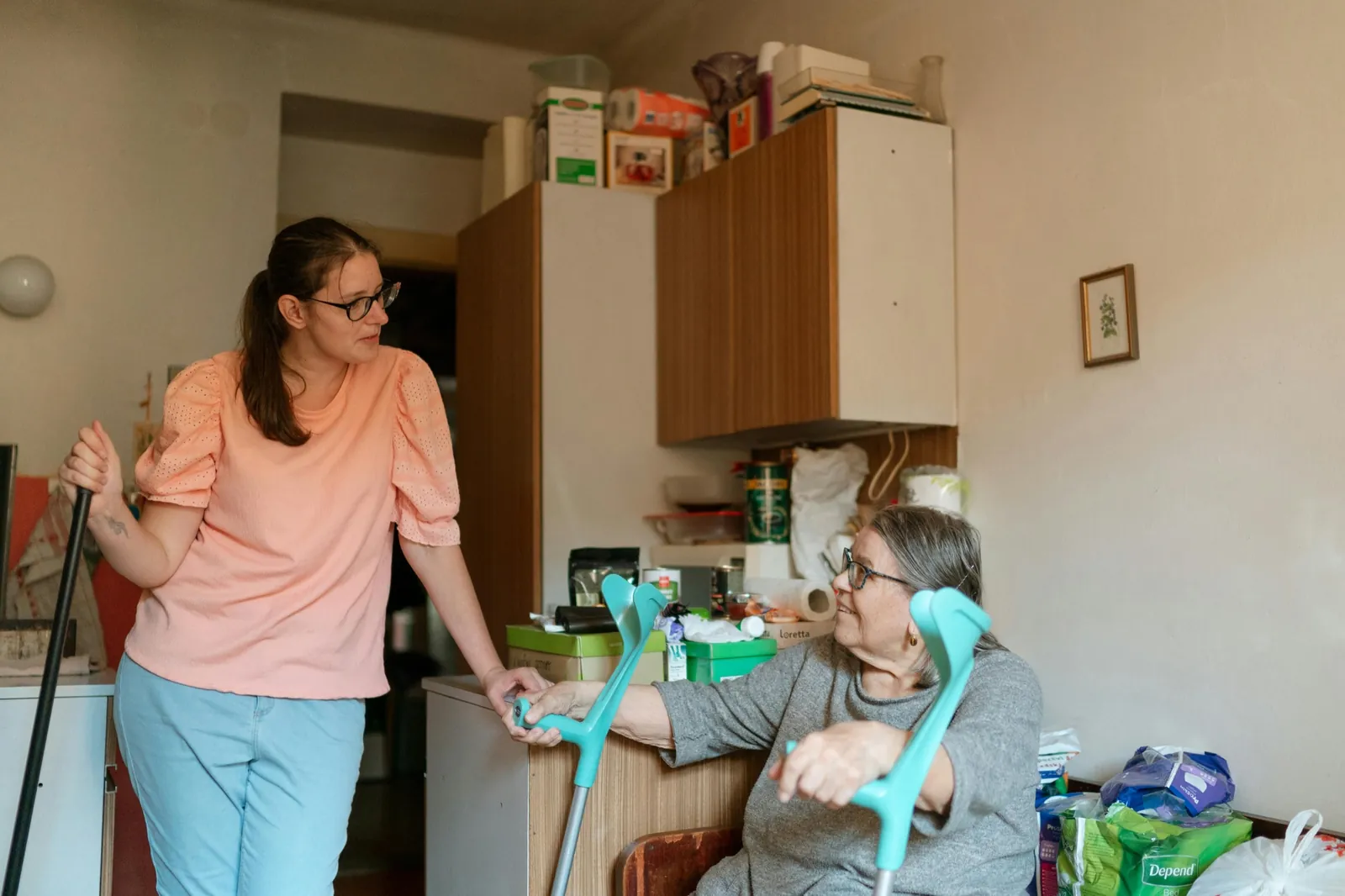
You noticed it on the last visit. Maybe it was the stack of unopened mail, or the milk three weeks past its date still in the fridge, or the way your mother gripped the counter on her way across the kitchen. Maybe it was nothing you could point to exactly — just a feeling that the gap between what she can do and what living alone requires has quietly widened. And now you're carrying a question you didn't ask for: is it still safe for her to be on her own?
That question is one of the hardest an adult child ever faces, and it usually arrives without a clear answer. There's rarely a single dramatic moment. It's an accumulation of small signs, and the danger is that families wait for a crisis to make the decision for them.
This guide is about reading those signs honestly, before a fall or a fire or a missed medication forces your hand. It's also about something most families don't realize: deciding the status quo can't continue is not the same as deciding on a nursing home. There's a lot of room between "fine alone" and "facility," and that room is where most families actually end up.
Why Waiting for a Crisis Is the Real Risk
Here's the sobering backdrop. Falls are the leading cause of injury and injury-related death among adults 65 and older, and about 1 in 4 older adults reports a fall every year.[1]
FALLS AFTER 65
1 in 4
the share of older adults who report falling each year — the leading cause of injury death in this age group, and often the crisis that forces a rushed decision.
The fall death rate isn't holding steady, either. The CDC reports it rose 21% between 2018 and 2024.[2] For an older person living alone, a fall isn't just an injury — it can be hours on the floor before anyone knows, followed by a hospital stay that ends in a facility because no one planned for anything else.
A RISING RISK
+21%
the increase in the older-adult fall death rate from 2018 to 2024 — the trend is moving the wrong way, which is why acting before a crisis matters more than ever.
That's the pattern worth avoiding. When families wait for a crisis, the crisis chooses the outcome — and it almost never chooses the gentlest one. Reading the signs early means you decide from a position of calm, with options, instead of from an ER waiting room at 3am.
The Warning Signs, Grouped So They're Useful
Individual signs are easy to explain away. ("Everyone forgets things." "The house is just a little messy.") No single item proves anything on its own. What matters is a cluster across categories — several showing up together. Watch for these.
Daily living (the ADLs): Difficulty bathing, dressing, or preparing meals. Wearing the same clothes repeatedly. Noticeable weight loss, which can point to skipped meals or trouble cooking. Expired food in the fridge.
Cognition and memory: Missed medications. Repeated questions or stories within one conversation. Trouble managing money or paying bills. Getting confused on familiar routes. Forgetting to turn off the stove or lock the door. Several of these overlap with the recognized early warning signs of dementia, which is why a cluster here deserves attention rather than reassurance.[3]
The home itself: Piles of unopened mail. Unpaid bills stacking up. Clutter that's become a tripping hazard. A house that used to be tidy and isn't anymore.
Mobility and safety: Holding onto walls and furniture to move around. Hesitating on stairs. New bruises they can't quite explain. A fall they downplayed.
Mood and connection: Pulling away from friends, hobbies, church. Loss of interest in things they used to love, which can signal depression as much as fatigue — late-life depression is common, frequently missed, and treatable.[4]
HOW COMMON THE WARNING SIGNS ARE
~45%
in a large national study of community-dwelling adults 65+, nearly half had already experienced falls, a fear of falling, or both — the early signals are far more common than families expect.
One or two of these in isolation may mean nothing. Several of them together, trending the wrong way over months, is the signal that the current arrangement has stopped working.
Older adult falls are common, costly, and preventable.
The Sign Families Miss: It's Showing Up in You
There's a warning sign that has nothing to do with your parent's house, and families almost always overlook it: their own exhaustion.
If you're driving across town twice a day, lying awake worrying, using your lunch breaks to manage your parent's pharmacy, and quietly running yourself into the ground to keep their independence propped up — that's data too. When keeping someone "independent" requires another person to silently sacrifice their health, sleep, and finances, the independence is already gone; it's just been transferred to you.
That's not a reason for guilt. It's a reason to recognize that "she's still living alone" may already be a fiction held together by your invisible labor — and that a more honest arrangement might be better for both of you.
Deciding Something Must Change ≠ Deciding on a Facility
This is the part that brings families the most relief, because most arrive at this question assuming the only two options are "alone" and "nursing home."
They're not. Between full independence and institutional placement sits a wide range of support:
- Home modifications — grab bars, better lighting, a stair rail, a medical alert device — that close specific safety gaps.
- In-home help, from a few hours a day to full-time, so someone is present for the risky moments.
- A family member stepping into a formal caregiving role, sometimes moving in or having the parent move in with them.
- Adult day programs for daytime supervision and social connection.
Research consistently finds that older adults do better, by most measures, when they can stay in a familiar home — provided the right support is in place.[6] The danger isn't staying home; it's staying home without support. The whole point of reading the signs early is to add support before a crisis removes the option. It's also overwhelmingly what older adults themselves want: roughly three-quarters of adults 50 and older say they want to stay in their current home and community as they age.[7]
WHAT OLDER ADULTS WANT
~75%
of adults 50+ say they want to remain in their own home and community as they age — which is why "something must change" so rarely needs to mean a facility.
For many Indiana families, the turning point is realizing that the family member already doing the invisible caregiving can do it as a recognized, supported, and even paid role — which changes the math on whether home is sustainable.
When It Genuinely Is Time for More Than Home Can Offer
Honesty requires the other side of this. Sometimes the right answer really is a higher level of care than home can safely provide, and pretending otherwise puts your loved one at risk.
Home may no longer be enough when:
- Safety can't be secured even with support — wandering, repeated falls despite modifications, leaving the stove on with no reliable supervision.
- Skilled medical needs exceed what's available at home — complex wound care, conditions requiring round-the-clock clinical monitoring.
- The behavioral or physical demands exceed any one household's capacity, even a devoted one.
- The caregiver's own health is collapsing and no additional support can be arranged.
Choosing more care in these situations isn't failure. It's love making a hard call with clear eyes. The goal of this whole exercise is to make whatever decision is right a chosen one, not a crisis default.
How to Start the Conversation
The signs are only useful if they lead somewhere, and that means a conversation your parent will probably resist. A few things help:
- Lead with specifics, not conclusions. "I noticed the bills piling up and a couple of falls" lands better than "you can't live alone anymore."
- Frame it as keeping them home, not moving them out. Most older adults will engage far more willingly with "how do we keep you here safely" than with anything that sounds like a facility.
- Bring one idea, not an ultimatum. A single concrete step — a home assessment, a few hours of help — is easier to accept than a sweeping plan.
- Expect more than one conversation. This is rarely settled in a single sitting, and pushing too hard can shut it down.
What This Means for Your Family
Knowing when it's time comes down to reading a cluster of signs honestly — in your parent's daily life, their home, their body, their mood, and in your own exhaustion — and acting before a crisis decides for you. The thing most families miss is that "something has to change" usually opens onto a range of supported options at home, not a single grim destination.
At Tender Home Care, we help Indiana families who've reached this point figure out whether keeping a loved one at home with support is realistic — and we'll tell you honestly when a higher level of care is the safer choice. If staying home is the right path, the family member already providing care may qualify to do it as a paid, supported role through Indiana's Structured Family Caregiving program. The conversation costs nothing.
If you've already decided to keep your parent home and you're facing pressure to do otherwise, you may find our piece on why "just put them in a home" is rarely the right answer worth reading next.
Sources
[1] U.S. Centers for Disease Control and Prevention. "Older Adult Falls Data" — falls are the leading cause of injury for adults 65+; 1 in 4 report a fall yearly. 2026. Link.
[2] U.S. Centers for Disease Control and Prevention. "Older Adult Falls Data" — age-adjusted fall death rate rose 21% from 2018 to 2024. 2026. Link.
[3] Alzheimer's Association. "10 Early Signs and Symptoms of Alzheimer's and Dementia.". Link.
[4] National Institute on Aging. "Depression and Older Adults" — late-life depression is common, often missed, and treatable. Link.
[5] National Institute on Aging / National Health and Aging Trends Study (Johns Hopkins), as analyzed in peer-reviewed research on living alone, falls, and functional limitations in older adults. Link.
[6] National Institute on Aging. "Aging in Place: Growing Older at Home" — safety modifications and in-home support that help older adults remain home. Link.
[7] AARP. "2024 Home and Community Preferences Survey" — roughly three-quarters of adults 50+ want to remain in their current home and community as they age. Link.
About Tender Home Care
Caring for a loved one in Indiana?
Tender Home Care is a licensed Indiana Medicaid provider helping families get paid for the care they are already giving through the Structured Family Caregiving program. If you're already caring for an aging parent, spouse, or family member, you may qualify for a tax-free weekly stipend. We'll tell you honestly whether the program is right for your situation, including when it isn't.
Keep Reading
More from the Tender blog


Let's Talk
Readytogetstarted?
Let's Talk
Ready to get started?