🎉 Ask about earning $100/day! 🎉 Earn $100/day!
Conditions & Care
Caring for a Parent With Dementia at Home in Indiana
10 min read
Caring for a parent with dementia at home is one of the hardest jobs there is. What helps, what to expect, and the Indiana support most families never find.
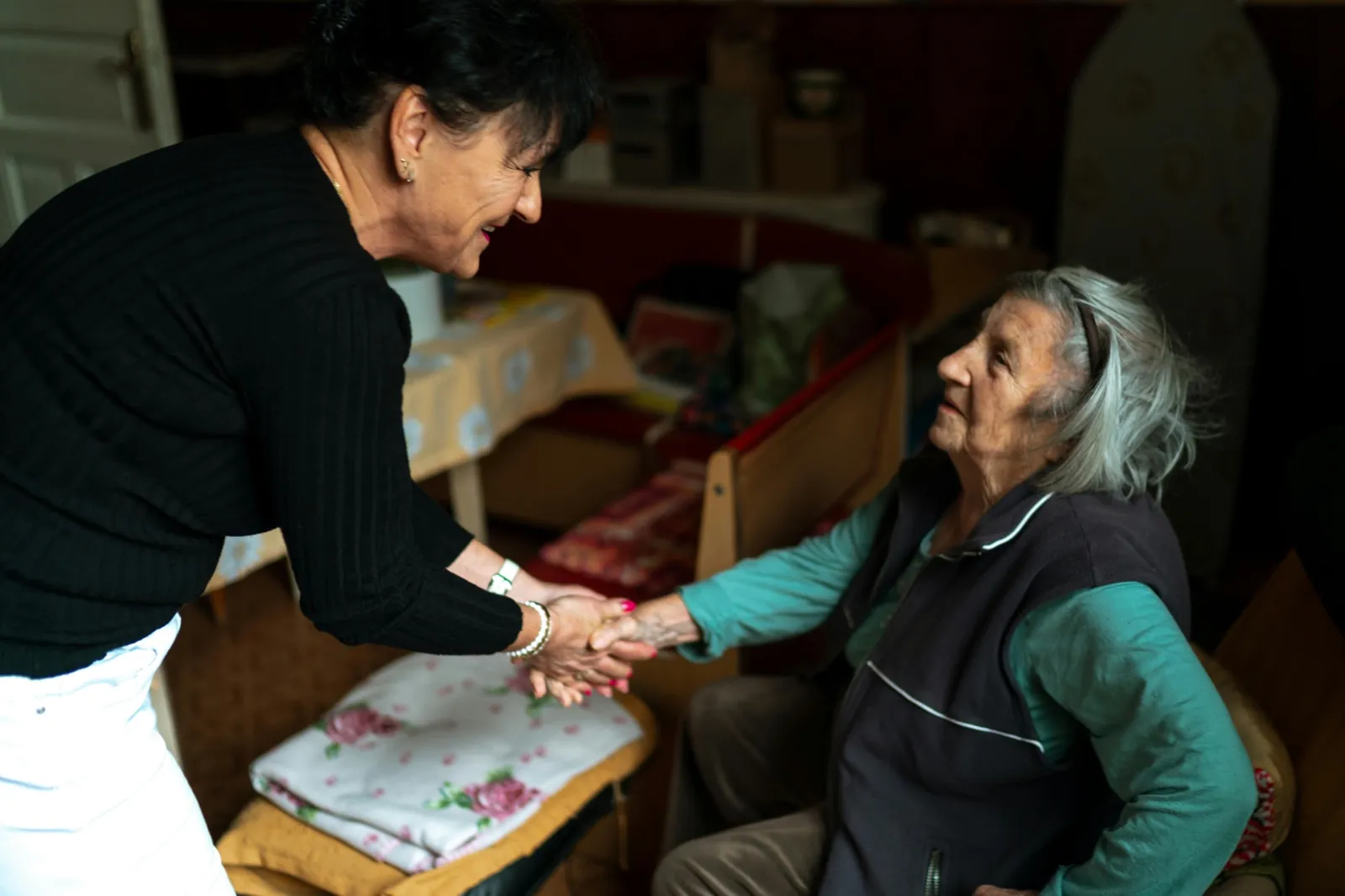
There's a particular grief in dementia that other illnesses don't carry: the person is still here, and also, in pieces, already leaving. You're caring for your mother and mourning her at the same time. Some days she knows you. Some days she asks when her daughter is coming, and you are her daughter, standing right there. You learn to answer the question behind the question, to meet her where she is rather than where she was, and it costs you something every single time.
If you're doing this at home, you're in enormous company, even when it feels like the loneliest job on earth. And you're doing something the evidence supports: with the right help, home is often where people with dementia do best. The hard part was never whether home is good for them. The hard part is getting enough support so it doesn't break you.
This guide is about that support — what to expect as the disease progresses, what actually helps day to day, where the honest limits are, and the Indiana program that can turn the care you're already giving into a recognized, paid, supported role.
You Are Part of a Vast, Mostly Invisible Workforce
It helps to see the scale, because dementia caregiving is designed to make you feel alone.
Nearly 12 million Americans provide unpaid care for someone with Alzheimer's or another dementia, contributing more than 19 billion hours of care in a single year — care valued at over $413 billion.[1] More than 7 million Americans aged 65 and older are now living with Alzheimer's, the first time the number has crossed that threshold.[2]
THE UNPAID WORKFORCE
$413 billion
the value of unpaid care that nearly 12 million dementia caregivers provided in a single year — work that rarely shows up on any invoice or budget line.
HOOSIERS WITH ALZHEIMER'S
121,000+
Indiana residents aged 65+ living with Alzheimer's, cared for largely by an estimated 221,000 unpaid family caregivers.
In Indiana specifically, more than 121,000 Hoosiers aged 65 and older are living with Alzheimer's, supported by roughly 221,000 family caregivers who provide an estimated 329 million hours of unpaid care.[3] If you feel like you're holding up a corner of the world by yourself, it's because, statistically, you are — alongside hundreds of thousands of other Hoosiers doing the same thing in their own homes.
What to Expect as It Progresses
Dementia keeps changing, and the care it asks of you changes with it. Knowing the broad arc helps you prepare instead of being blindsided.
Early stage: Your parent is largely independent but needs reminders and supervision — help with appointments, finances, medications. The caregiving here is more cognitive scaffolding than hands-on care. This is the stage to put legal, financial, and care plans in place, while your parent can still participate in decisions.
Middle stage: Usually the longest stage, and the one that reshapes a household. Help with daily activities — dressing, bathing, eating — becomes hands-on. Confusion, agitation, sleep disruption, and wandering may emerge. Supervision becomes closer to constant. This is where caregiver exhaustion typically peaks.
Late stage: Extensive, around-the-clock care. Your parent may lose the ability to communicate, walk, or manage basic functions. The needs become intensive, and this is the stage where families most honestly have to weigh whether home remains safe and sustainable.
No two people move through these stages on the same timeline, and skills come and go unevenly. There's no script to memorize. What helps is letting go of last year's parent and learning to care for this week's.
What Actually Helps Day to Day
The practical wisdom from people who've done this, and from the organizations that study it, tends to converge on a few things.
Build structure and routine. Predictable days reduce confusion and agitation. Same wake time, same meals, same rhythms. Novelty is hard for a dementia brain; familiarity is calming.
Meet them in their reality. Arguing with a false belief ("no, Dad died years ago") causes pain without changing anything. Stepping into the moment and responding to the emotion behind it is gentler and works better.
Dementia does not rob someone of their dignity. It's our reaction to them that does.
Simplify the environment. Reduce clutter and noise. Label things. Remove tripping and wandering hazards. Good lighting cuts down on the shadows that fuel late-day confusion.
Plan for "sundowning." Many people with dementia grow more agitated in late afternoon and evening. Anticipating it — calmer activities, more light, less stimulation — beats reacting to it.
Take the medical relationship seriously. Dementia care coordination is genuinely hard; the Alzheimer's Association reports that 70% of dementia caregivers find coordinating care stressful.[4] A consistent relationship with your parent's doctor, and good notes, make every appointment count for more.
The Part That Gets Buried: Caring for the Caregiver
Here's the statistic that should change how you treat yourself: roughly 40% of dementia caregivers report depression, and dementia caregiving carries a heavier mental-health toll than most other kinds of caregiving.[5]
THE CAREGIVER'S TOLL
0%
the share of dementia caregivers who report depression — a reminder that your wellbeing is part of the care plan, not separate from it.
This isn't a soft aside. A caregiver who collapses can't provide care, and dementia caregiving is a marathon often measured in years. The encouraging news is that support demonstrably helps: research finds that community-based interventions for dementia caregivers — support groups, education, respite — significantly improve depression, stress, and anxiety, whether delivered in person or online.[6] The interventions work. The problem is that most families never reach them.
Respite, in particular, is not a luxury you earn by collapsing first. It's the thing that keeps you upright long enough to finish the marathon. Building in regular breaks is part of doing this well, not a sign you're doing it poorly.
Where Home Care for Dementia Has Real Limits
The honesty section, because dementia is exactly the condition where false reassurance does harm.
Home is not always the right setting, and clinging to it past the point of safety helps no one:
- When wandering or exit-seeking can't be made safe, even with locks, alarms, and supervision, the risk to your loved one can exceed what a home can manage.
- When behaviors become dangerous — aggression, severe agitation — to your loved one or to you.
- When late-stage needs require skilled, round-the-clock care beyond what any single household can sustain.
- When you, the caregiver, are genuinely breaking and no additional support closes the gap.
Reaching one of these points isn't a failure of love or effort. It's the disease outrunning what home can hold. A good provider, a good doctor, and the Alzheimer's Association's Indiana chapter can help you read that line honestly rather than blow past it out of guilt.
The Indiana Support Most Dementia Families Never Find
Here's what too few Indiana families discover until late: if your parent has dementia and qualifies for Medicaid, the care you're already providing at home may be eligible for support and payment through Structured Family Caregiving.
Because dementia so often meets the program's "nursing facility level of care" threshold, families caring for a parent with Alzheimer's are frequently strong candidates.[7] What SFC adds isn't just a tax-free stipend for the care you're already giving — it's a caregiver coach, training tailored to your parent's needs, regular check-ins from a nurse or coach, and built-in respite so you can rest.[7] For a dementia caregiver running on empty, that combination of income, training, and relief can be the difference between sustainable and not.
It won't make the disease easier. Nothing makes dementia easy. But it can make the caregiving more supported, less isolating, and less financially crushing — which, given that 40% depression figure, matters more than it might first appear.
What This Means for Your Family
Caring for a parent with dementia at home is among the hardest things a person can do, and you're doing it alongside hundreds of thousands of other Hoosiers, mostly invisibly. Home is often where your parent does best — but only with enough support that the caregiving doesn't break you. That means structure and routine for them, real respite and mental-health care for you, an honest eye on the limits, and tapping the support that exists.
At Tender Home Care, we help Indiana families caring for a loved one with dementia find out whether Structured Family Caregiving fits their situation — bringing training, a caregiver coach, respite, and a tax-free stipend to the care they're already providing. And we'll be honest with you about when home is no longer the safest place. The conversation costs nothing.
For the broader picture of getting paid to provide this care, see how to get paid to care for a family member in Indiana. And if you're weighing whether home is still the right setting, how to know when it's time is a companion to this piece. For the emotional toll specifically, our guide to caregiver burnout may help.
Sources
[1] Alzheimer's Association. "2025 Alzheimer's Disease Facts and Figures" — nearly 12 million caregivers, 19 billion hours, $413 billion. 2025. Link.
[2] Alzheimer's Association. "2025 Alzheimer's Disease Facts and Figures: Executive Summary" — more than 7 million Americans 65+ with Alzheimer's. 2025. Link.
[3] Alzheimer's Association, Greater Indiana Chapter — 121,000+ Hoosiers with Alzheimer's; 221,000 caregivers; 329 million hours of unpaid care. Link.
[4] Alzheimer's Association. "New Report Reveals Top Stressors for Caregivers" — 70% find coordinating care stressful. 2024. Link.
[5] Alzheimer's Association. "2025 Alzheimer's Disease Facts and Figures" — roughly 40% of dementia caregivers report depression. 2025. Link.
[6] 2025 meta-analysis of community-based interventions for dementia caregivers (23 studies), finding significant improvements in depression, stress, and anxiety. Summarized in 2026 reporting on the Alzheimer's Association Facts and Figures data.
[7] Indiana Family and Social Services Administration. "Structured Family Caregiving (SFC)" — level of care, caregiver coach, training, and respite provisions. 2025. Link.
About Tender Home Care
Caring for a loved one in Indiana?
Tender Home Care is a licensed Indiana Medicaid provider helping families get paid for the care they are already giving through the Structured Family Caregiving program. If you're already caring for an aging parent, spouse, or family member, you may qualify for a tax-free weekly stipend. We'll tell you honestly whether the program is right for your situation, including when it isn't.
Keep Reading
More from the Tender blog


Let's Talk
Readytogetstarted?
Let's Talk
Ready to get started?