🎉 Ask about earning $100/day! 🎉 Earn $100/day!
Caregiver Wellbeing
The Silent Epidemic of Loneliness — and How a New Indiana Program Fights Back
9 min read
Loneliness is as deadly as smoking and far more common than people think. Here's how isolation harms older adults, and the simple thing that helps most.
"The mortality impact of being socially disconnected is similar to that caused by smoking up to 15 cigarettes a day, and even greater than that associated with obesity and physical inactivity." — Dr. Vivek Murthy, U.S. Surgeon General, 2023
We don't think of loneliness as a health problem. We think of it as a mood — something soft and sad, the province of greeting cards, not doctors. That instinct is wrong, and the consequences of it being wrong fall hardest on older adults.
When the U.S. Surgeon General compared chronic loneliness to smoking 15 cigarettes a day, he wasn't reaching for a metaphor. He was reporting what decades of research found: that the absence of human connection does measurable, physical damage to the body, on the scale of the risk factors we take most seriously.[1] For an isolated senior, loneliness isn't just a hard feeling. It's a health condition with a body count.
This piece is about what loneliness actually does to older adults, why so many Indiana seniors are quietly living with it, and the encouraging part — the simple, low-tech thing that helps more than almost anything else.
How Common This Really Is
The scale is larger than most families imagine, partly because lonely seniors are the least likely to say so out loud.
A landmark report from the National Academies of Sciences, Engineering, and Medicine found that 43% of adults aged 60 and older report feeling lonely, and roughly a quarter of community-dwelling adults 65 and older are socially isolated — meaning they have few relationships or little regular contact with others.[2] The National Institute on Aging puts the isolation figure at about 1 in 4 adults 65 and older.[3]
LONELINESS AFTER 60
0%
the share of adults aged 60 and older who report feeling lonely, according to the National Academies — nearly half of the people in this stage of life.
National Academies of Sciences, Engineering, and Medicine, 2020
Think about who's at highest risk and why. Older adults are more likely to live alone, to have lost a spouse or close friends, to manage chronic illness that limits getting out, to no longer drive. None of these cause loneliness on their own, but stacked together they build a quiet isolation that a busy family, checking in by phone between obligations, can easily miss.
What Isolation Does to the Body and Mind
Here's where the "it's just a mood" framing collapses. The physical toll of social disconnection is documented and severe.
According to the Surgeon General's advisory, poor social connection is associated with a 29% increased risk of heart disease, a 32% increased risk of stroke, and — for older adults specifically — roughly a 50% increased risk of developing dementia.[1]
ISOLATION AND THE BRAIN
~50%
the increased risk of developing dementia linked to chronic social isolation in older adults — alongside a 29% higher risk of heart disease and 32% higher risk of stroke.
The mechanisms aren't mysterious. Chronic loneliness raises stress hormones and inflammation, elevates blood pressure, disrupts sleep, and erodes the motivation to eat well, move, and keep up with medications.[1] Research using the Health and Retirement Study has found that socially disconnected and lonely older adults carry measurably higher dementia risk, consistent with that biological picture.[4] An isolated senior often declines on several fronts at once — and the decline feeds the isolation, which deepens the decline.
There's a financial dimension too, which is partly why public-health officials treat this so seriously. Social isolation among older adults is estimated to account for roughly $6.7 billion in excess Medicare spending every year, driven by more hospital stays and nursing facility admissions.[5] Loneliness doesn't just hurt; it costs.
THE PRICE OF ISOLATION
$6.7 billion
the estimated excess annual Medicare spending tied to social isolation among older adults — from added hospital stays and nursing facility admissions.
The Indiana Picture
This isn't an abstract national problem. It's playing out in Indiana living rooms right now.
Indiana's population is aging, rural stretches of the state leave many seniors far from family and services, and harsh winters can box an older person indoors for months. By 2025, roughly one in five Hoosiers is 65 or older, and that share keeps climbing — which means the pool of older adults at risk of isolation is growing, not shrinking.[6] The same risk factors the research names — living alone, lost spouses, chronic illness, lost mobility — are widespread among Hoosier seniors. Every county in Indiana has older adults who go days, sometimes longer, without a real conversation.
INDIANA IS AGING FAST
1 in 5
Hoosiers are 65 or older as of 2025, a share the state expects to keep rising — widening the population most exposed to social isolation.
For families, the hard truth is that you can be deeply devoted and still not be enough on your own. If you work, raise kids, and live across town or across the state, you can't fill every quiet afternoon. That's not a failing. It's a gap — and gaps can be filled by more than one set of hands.
The Simple Thing That Helps Most
After all the grim numbers, here's the genuinely hopeful part: the fix is not complicated, expensive, or high-tech. It's regular human contact.
The research on interventions points to something almost disarmingly simple — consistent, meaningful connection. A standing phone call. A weekly visit. A familiar voice that asks about your garden and remembers your grandkids' names. The interventions that work aren't elaborate; they're reliable. Someone shows up, again and again, and the isolation breaks.
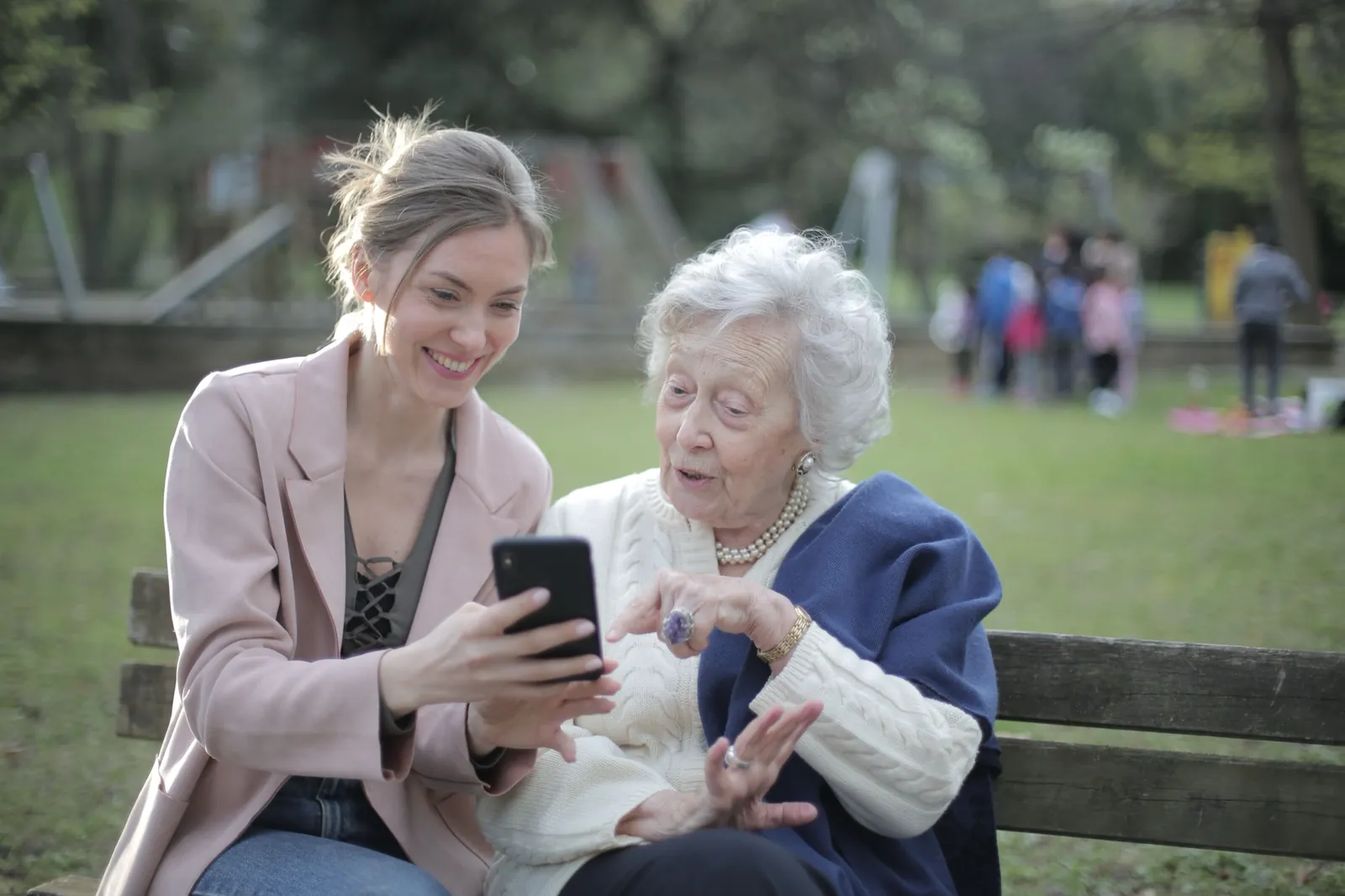
This is exactly why we built our Friendly Neighbors program. Trained volunteers make regular calls and visits to lonely seniors across Indiana — in English or Spanish — for no reason other than connection. No sales pitch, no agenda. Just a person on the other end of the line, every week, who knows your name and is glad to hear your voice.
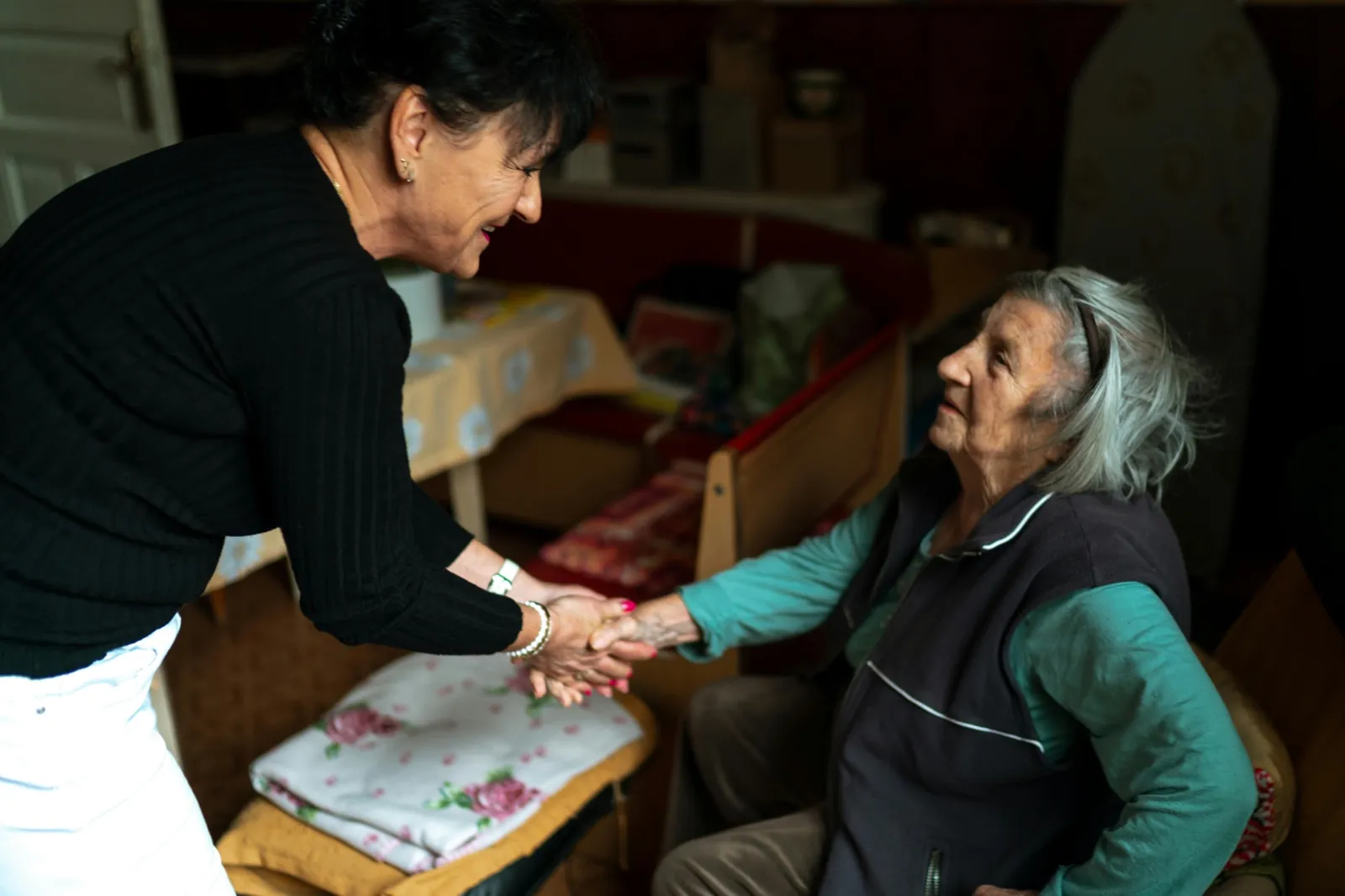
Every Wednesday at 2pm, my phone rings. It's Carla. She asks about my week, my garden, my grandkids. It's the highlight of my week.
For the people who volunteer, it turns out to go both ways. "I signed up thinking I was doing something for Margaret," says Carla, 34, one of our Friendly Neighbors volunteers. "But I get as much out of our calls as she does. She's become one of my favorite people." Connection, it turns out, isn't a one-way transaction — it nourishes both ends of the line.
The Honest Limits
We won't pretend a weekly call solves everything. It doesn't.
A friendly visit is not a substitute for medical care, for treatment of clinical depression, or for the hands-on help a senior with real care needs requires. If an older person shows signs of depression — persistent hopelessness, loss of interest, changes in sleep or appetite — that warrants a doctor, not just more phone calls. And the deepest isolation, the kind tangled up with serious illness or grief, often needs professional support alongside human connection.
Connection is powerful, and it's also not a cure-all. It works best as one layer of support among several — a call, plus family, plus medical care, plus whatever hands-on help the person actually needs. The point isn't that a phone call fixes everything. It's that the absence of any connection at all makes everything worse, and that the absence is so easy, and so cheap, to fix.
Where This Connects to Care
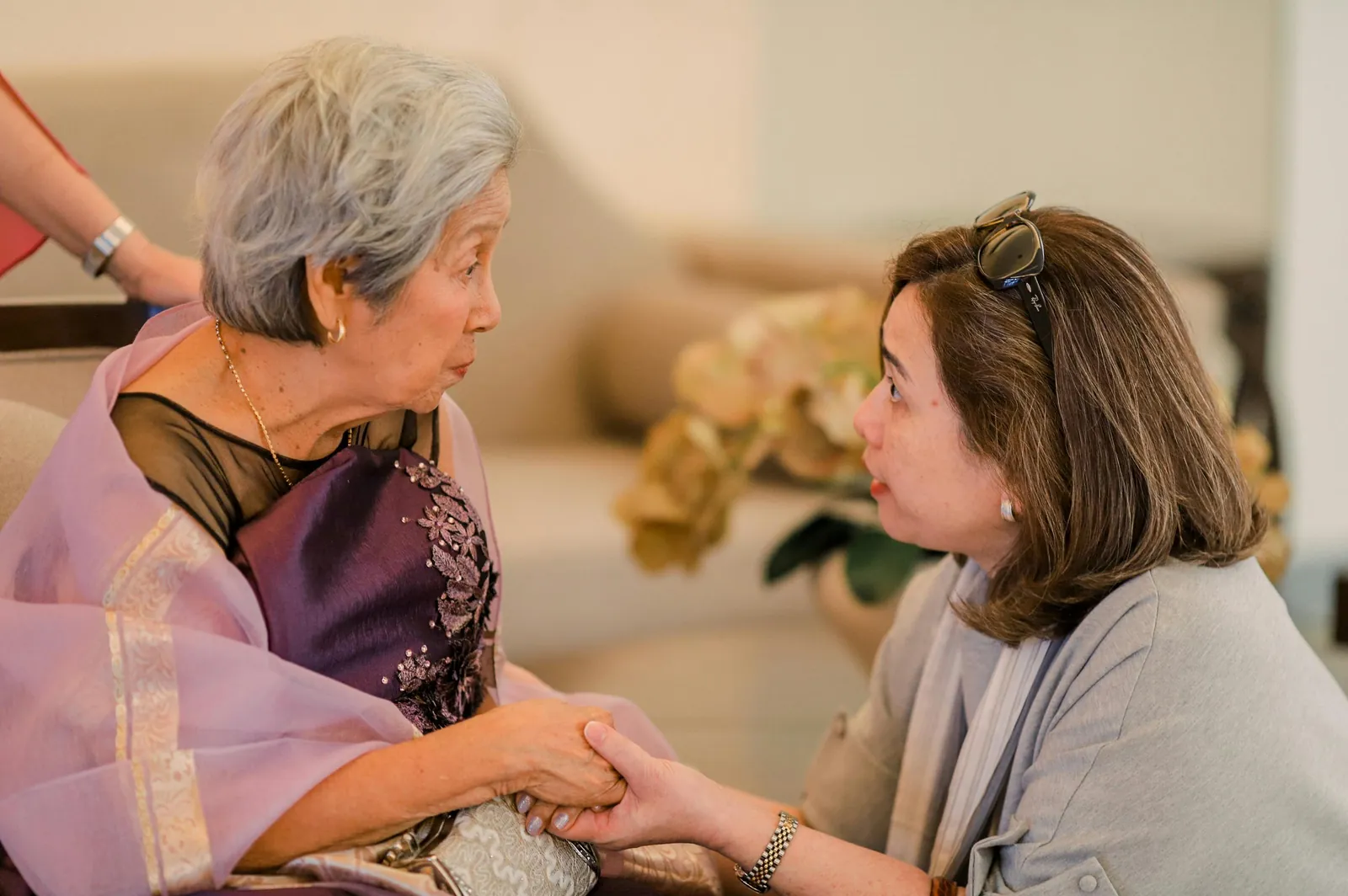
For families already caring for an aging loved one, isolation and caregiving are two sides of one coin. The senior who's isolated often needs care; the family providing care often can't be there every hour. Building connection into the care plan — through programs like Friendly Neighbors, adult day services, or community events — fills the hours family can't, and protects the older person's health in the process.
And for the family caregiver shouldering it, that support cuts both ways: every hour a trusted volunteer spends with your loved one is an hour you can breathe. The same principle that protects a lonely senior — more than one set of hands — protects the caregiver too.
What This Means for Your Family
Loneliness is not a soft problem. For older adults it's a serious health risk, on the scale of smoking, raising the odds of heart disease, stroke, and dementia — and it's common, affecting close to half of Hoosiers over 60. The encouraging news is that the remedy is simple and human: reliable, regular connection. A call that comes every week. A voice that knows your name.
At Tender Home Care, we run our Friendly Neighbors program because we believe no one in the communities we serve should go a week without a real conversation. If you know a senior who could use a regular call — or you'd like to be the person who makes one — we'd love to hear from you through our Our Community page. And if you're caring for a loved one who's increasingly isolated, our guide to caring for a parent at home may help you think through the bigger picture.
Sources
[1] Office of the U.S. Surgeon General. "Our Epidemic of Loneliness and Isolation" — mortality impact comparable to smoking up to 15 cigarettes/day; 29% higher heart disease risk, 32% higher stroke risk, ~50% higher dementia risk; biological mechanisms (stress hormones, inflammation, blood pressure). 2023. Link.
[2] National Academies of Sciences, Engineering, and Medicine. "Social Isolation and Loneliness in Older Adults" — 43% of adults 60+ report loneliness; ~24% of adults 65+ socially isolated. 2020. Link.
[3] National Institute on Aging. "Social Isolation and Loneliness Outreach Toolkit" — about 1 in 4 adults age 65+ are socially isolated. Link.
[4] Health and Retirement Study analysis — socially disconnected and lonely older adults at higher prevalent and incident dementia risk. National Institutes of Health / PMC. Link.
[5] National Association of Counties, summarizing the U.S. Surgeon General's Advisory — social isolation among older adults associated with an estimated $6.7 billion in excess annual Medicare spending. 2023. Link.
[6] Indiana Family and Social Services Administration. "Long-Term Care Transformation (Age Forward)" — roughly one in five Hoosiers is 65 or older as of 2025, a growing share of the state's population. Link.
About Tender Home Care
Caring for a loved one in Indiana?
Tender Home Care is a licensed Indiana Medicaid provider helping families get paid for the care they are already giving through the Structured Family Caregiving program. If you're already caring for an aging parent, spouse, or family member, you may qualify for a tax-free weekly stipend. We'll tell you honestly whether the program is right for your situation, including when it isn't.
Keep Reading
More from the Tender blog
Let's Talk
Readytogetstarted?
Let's Talk
Ready to get started?